
This page forms the JANBOELO fashion archive; an overview of collections shaped by making, process and perspective.
JANBOELO started as a fashion label, but what remains today is something broader. This page brings together a selection of past collections, alongside the context in which they were made and the perspective that shaped them.
It is not a portfolio in the traditional sense, but a personal archive — a way of looking back at the work without separating it from the process behind it. The collections reflect a period of working within fashion as a system, while what followed moved beyond it. Both belong to the same trajectory.
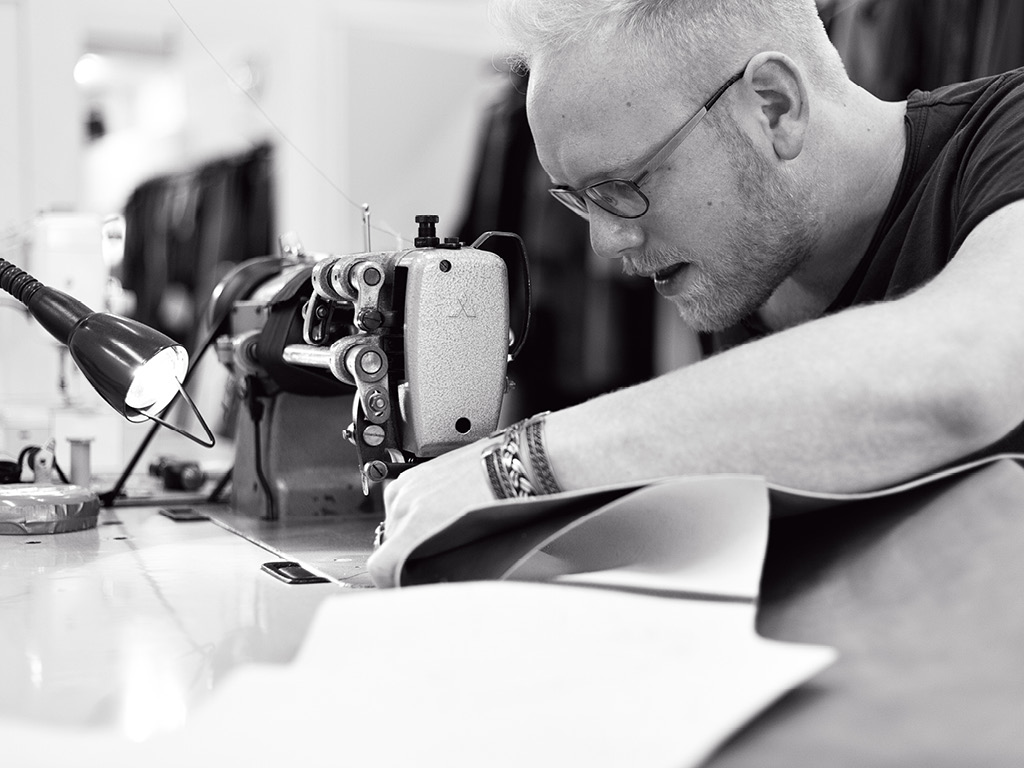
From the beginning, fashion was never approached as a trend-driven discipline, but as a way of working with material, form and structure. The focus was not on producing collections within a fixed rhythm, but on developing pieces with a certain weight — garments that carried intention rather than decoration.
That approach remained consistent over time, even as the context around it changed. What mattered was not the output itself, but the process behind it: understanding how something is made, how it fits, how it holds its shape, and how it is experienced when worn. In that sense, fashion was always a medium rather than a goal
Certain moments defined how the work evolved, not because they were planned that way, but because they changed how everything was seen afterwards.
The Spring Summer 2012 collection, presented at Amsterdam Fashion Week, marked the first time the work reached a wider audience. It brought visibility and recognition, and with that came new opportunities and a growing structure around the label. The work expanded beyond the studio, moving into editorials, performances and different contexts.
At the same time, there were moments that introduced a different kind of awareness. Returning from Uganda and stepping into the environment of the Miljonairs Fair in Amsterdam created a contrast that was difficult to ignore. It wasn’t a single realisation, but a shift in perspective — one that stayed and gradually changed how the work, and the system around it, were understood.
“Some moments don’t stand out because they are big, but because they change how you look at everything after.”
The collections in the fashion archive below represent a period in which JANBOELO operated as an independent fashion label. Each collection was developed within its own context, shaped by influences, materials and the way of working at that time.
Seen together, they form a continuous line. Ideas evolve, sharpen, repeat and sometimes disappear again. What might appear as separate collections are, in reality, part of the same process — a gradual movement from expression towards reduction, and eventually towards something beyond clothing.
On survival, craftsmanship and the beginning of a label. A collection shaped by making, questioning and the search for meaning within fashion.
On identity, contrast and the courage to be seen. A first collection under the label, exploring strength, concealment and self-definition.
An exploration of punk, glamrock and the tension between rawness and refinement.
A study of control and excess, where refinement quietly slips into something undone.
A collection shaped by return, resilience and the quiet confidence that follows survival.
A collection exploring identity under pressure, where control and individuality collide.
A collection exploring individuality within collective culture, shaped by music, movement and the desire to belong.
A collection built on restraint, where seduction lies in what is withheld rather than revealed.
A private collection, presented quietly – where form, material and restraint take the lead.
A collection built around brotherhood, identity and the strength of belonging to something shared.
A collection presented within a real environment — where clothing, space and context meet.
A collection exploring time, survival and the transformation of identity beyond structure.
A ready-to-wear collection focused on simplicity, wearability and reduction.
A story of standing on your own, while never truly standing alone. Strength is found in independence, but defined by connection.
The final collection.
A moment of transition, where past work evolves into something more immediate and connected.
As the label grew, so did the structure surrounding it. Collections became larger, timelines shorter, and expectations more defined. What initially felt like freedom gradually shifted into a system where output began to dictate direction.
The rhythm of the industry left little room for reflection. Decisions were increasingly influenced by pace rather than intention, and over time the process became less connected to what had made it meaningful in the first place. What once felt like a natural progression slowly became something that required constant continuation.
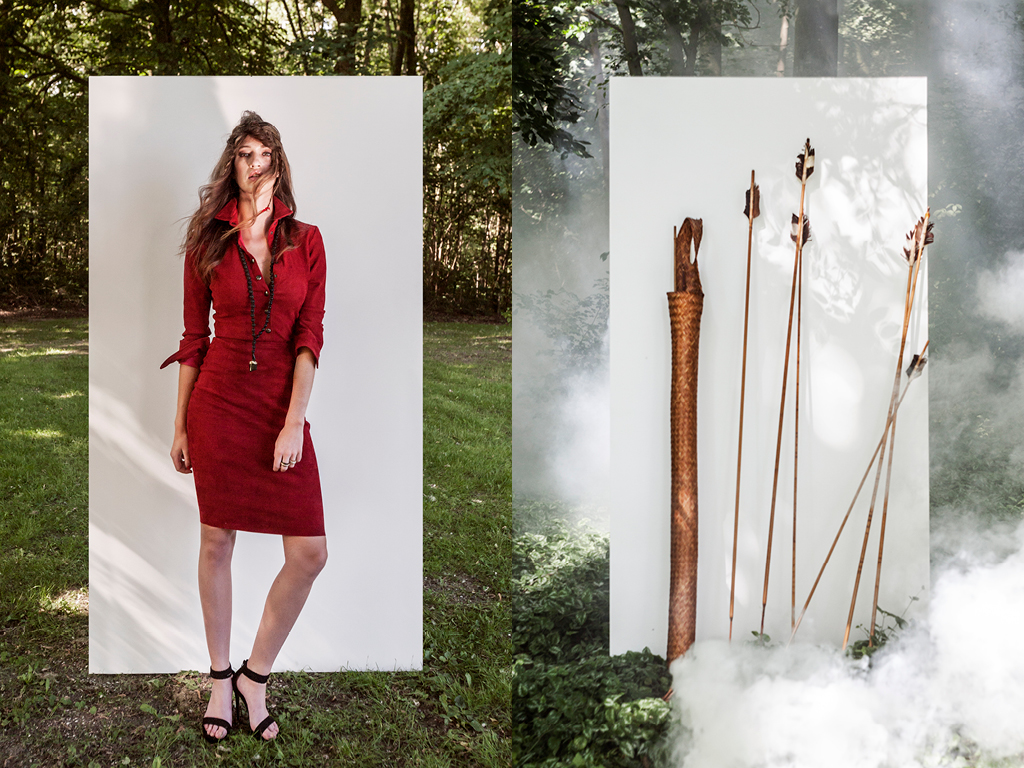
Stepping away from that system was not a rejection of fashion, but a response to a growing misalignment.
The work itself had already started to change — becoming quieter, more focused, and less dependent on external structure. That shift made it clear that the existing framework no longer supported the direction the work was moving in.
Leaving the system was therefore not an ending, but a continuation under different conditions.
“What I actually cared about never disappeared.”
What remained was not the structure, but the essence of the work itself. Making stayed central — working with materials, constructing garments, and understanding how something comes together.
Without the pressure of production, the process became slower and more deliberate. Ideas are given time to develop, and the act of making is no longer shaped by external timelines or expectations. In many ways, it returned to the same foundation it started from, but with a different awareness.
What remained was not the structure, but the essence of the work itself. Making stayed central — working with materials, constructing garments, and understanding how something comes together.
Without the pressure of production, the process became slower and more deliberate. Ideas are given time to develop, and the act of making is no longer shaped by external timelines or expectations. In many ways, it returned to the same foundation it started from, but with a different awareness.
“I still make things — just not in the same way anymore.”
Making continues, but in a different context. Through Luymes & Drenth, objects, garments and materials are explored in a way that allows for collaboration, cultural context and a slower approach to creation.
It is not a continuation of the past, but a development of what remained valuable. The process is no longer defined by fashion alone, but by a broader way of working — one that connects travel, material and making into a single line.
“Now I only make something when it feels right to do so.”