Philosophy
JANBOELO is shaped by a travel philosophy rooted in attention, context and time spent understanding places beyond first impressions.
Not every journey needs to become content, and not every place needs to become a destination. Some experiences only begin once movement slows down enough for observation to replace expectation.
Attention Takes Time
Travel does not become meaningful by moving faster or seeing more. It becomes meaningful when time is allowed to stretch — sometimes on the road, sometimes long before departure. Preparation matters. Reading, listening, understanding context before arriving creates space once you are there. Less searching, less consuming, more noticing. Time is not only measured in days or weeks. It is also a way of paying attention.
The slower a journey becomes, the more room there is for details that would otherwise remain invisible. Conversations without purpose. Landscapes that only begin to make sense after repetition. Daily rhythms that cannot be understood from a schedule alone.

Context over comfort
Luxury has its place, but it is not a goal in itself. Staying within the walls of a resort, shielded from daily life, rarely reveals much about the place you are in. Cultures do not live behind gates. Understanding a country begins with its people, routines, contradictions and ordinary moments — not with amenities designed to remove you from them.
What matters is not how far you travel from home, but how close you allow yourself to come to the realities of a place once you arrive.
Comfort can be found anywhere.
Context cannot.

Local knowledge changes everything
Places open differently when experienced through those who live there. Local guides do not just follow routes; they read situations. They understand timing, relationships, consequences. They know when something is possible — and when it is not. That knowledge cannot be scheduled in advance. Flexibility is not improvisation. It is awareness.
And often, what changes a journey most is not the place itself, but the people who quietly shape how you move through it.
Travel is not a checklist.
It is a process.
Less seeing, more understanding
Returning to the same place again and again often reveals more than moving on. Familiarity deepens perspective. What was once overlooked becomes visible. Understanding grows slowly, unevenly, and never feels complete.
Some places only begin to reveal themselves after you stop trying to fully understand them.
Distance from performance
JANBOELO deliberately keeps its distance from travel as performance. From destinations ticked off for proof. From perfect images taken before moments are lived. From documenting everything before it has settled.
What matters here is not visibility, but presence.
Not everything needs to be captured. Some things are better remembered.
Risk, responsibility and choice
Travelling this way involves uncertainty. Plans can change. Expectations are not always met. Large organisations offer reassurance and predictability — and sometimes that is the right choice.
But choosing local routes, local guides and less structured journeys also shifts responsibility back to the traveller. And sometimes, depth only appears once convenience disappears.
What you gain is not certainty, but depth.
A quiet position
JANBOELO does not argue for one right way to travel. It simply takes a position. One shaped by time spent on the road, by conversations rather than programmes, and by a growing awareness of how uneven the world is — and how much there is still to learn.
This space exists for those who are willing to slow down, to look closer, and to accept that understanding is always partial.
What began through fashion gradually expanded into something broader: a way of observing places, people, materials and movement with greater attention and less urgency.

For those who dare to slow down, stay present, and let a place reveal itself.
Explore the Worlds Behind JANBOELO
Karamoja, Uganda

A region where distance behaves differently, and where movement gradually becomes less about efficiency and more about attention. Karamoja does not immediately reveal itself, but slowly reshapes the way travel is experienced once you allow yourself to move within its rhythm.
What begins as landscape slowly turns into daily life once you remain long enough to notice it. Markets, routines, conversations and ordinary moments gradually reveal a side of Karamoja that often remains invisible to those only passing through.

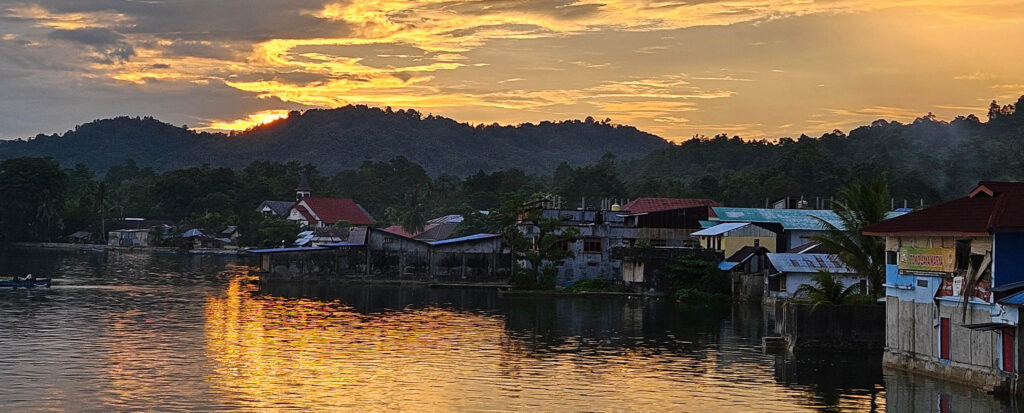
The Moluccas, Indonesia

Travelling through the Moluccas gradually shifts your relationship with time, distance and movement itself. Long crossings, island rhythms and layered histories create a journey that unfolds far beyond the places themselves.
On Saparua, daily life moves according to a rhythm that quietly reshapes your own. Conversations take longer, mornings begin collectively, and the distinction between travel and participation slowly disappears.