Saparua Island Indonesia: An Authentic Rhythm of Everyday Life
Some places don’t ask you to slow down. They simply leave you no other option.
Arriving on Saparua
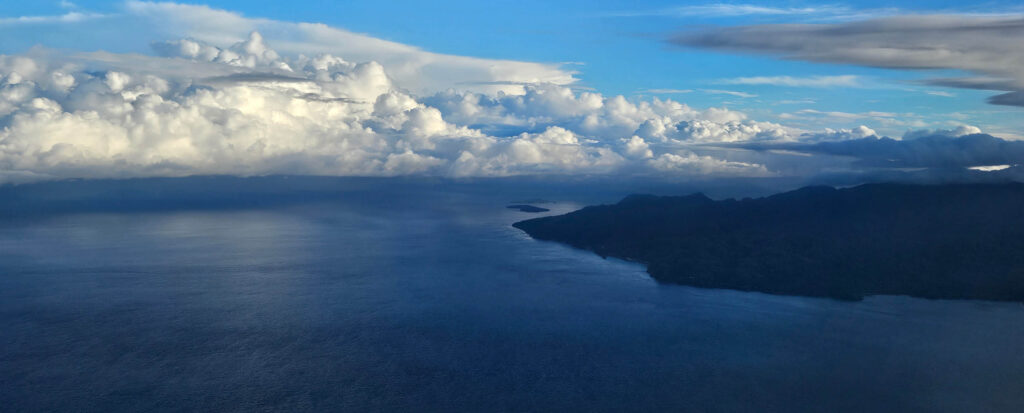
The journey to Saparua Island Indonesia doesn’t end when you leave Ambon, but becomes part of a broader journey through the Maluku Islands. In many ways, that’s where it begins. The boat cuts across open water, passing small islands that seem to appear and disappear again just as quickly. What looks close on a map stretches into something much larger once you are out there, surrounded by nothing but sea.
Travelling between islands like Ambon, Banda and Saparua quickly changes your sense of time and distance in ways that are difficult to explain before experiencing it yourself. At first, there is a moment of hesitation. The boat doesn’t quite match the standards you are used to, and for a brief moment, you become very aware of where you are. But that feeling fades quickly. The people around you travel like this every day, and somewhere between leaving the harbour and arriving on the island, you realise there is nothing to hold on to except the moment itself.

When we arrived, it wasn’t calm or structured. It felt chaotic in a way that was hard to place, yet at the same time there was an underlying sense of stillness. And then it hits you. You are no longer just travelling. You are on a small island, surrounded by sea, far away from everything that once felt close.

Mornings begin before you’re ready
The first morning starts before you even realise it. Somewhere around five o’clock, a sound carries across the island. Not an alarm, not something personal, but something shared. A voice follows, echoing through speakers, they call it the ‘daily reflections’, joined almost instantly by barking dogs and crowing roosters. It is impossible to ignore.
At first, it feels unfamiliar. You don’t know what it is, or why it happens. Later, you understand it better. But in those first moments, it simply pulls you into a rhythm that is not your own.
For someone used to late nights and slow mornings, this requires adjustment. Days begin earlier here, and slowly, your own rhythm starts to shift with it. Not because you choose to, but because there is no real alternative. The island moves, and you move with it.
“You don’t wake up on Saparua because you choose to — the island wakes you, and expects you to follow.”
Days are shaped by people, not plans
On Saparua, days rarely unfold the way you expect them to. Plans exist, but they are flexible. A start time of eight might become half past, or later, depending on what happens in between. At first, that can feel unfamiliar, even slightly frustrating. But over time, the structure you are used to begins to loosen.
Instead of the day being shaped by a schedule, it is shaped by people. Conversations take longer. Moments extend. And what might seem like a delay slowly becomes something else entirely.
That rhythm was not limited to daily life alone. I encountered it again in Ouw, where clay, craftsmanship and community seemed to move to the same unhurried pace as the island itself. I wrote more about that experience in Ouw and the Rhythm of Making on Saparua Island.
It reminded me of places I had been before, where time is not something you control, but something you move through. In the West, we try to fit as much as possible into a single day. Here, the day simply unfolds, and that is enough.
Learning doesn’t only happen in classrooms
Education on Saparua does not stay within the walls of a classroom. It moves between spaces, between people, and often between languages.
One of the most memorable moments was reading with the children. The books were in English, which meant I could take the lead at first. But it didn’t take long before the roles shifted. They knew the stories, the words, the meaning behind them, and I didn’t. So we reversed it. I read in English, and they taught me how to say it in Bahasa Indonesia.
What followed was less about reading, and more about connection. There was laughter, especially when I got the pronunciation wrong, which was often. But that laughter didn’t create distance. It created openness. By showing that I was willing to try and fail, they felt free to do the same.
In that moment, learning moved beyond language. It became something shared.

“I came to read to them, but somehow they ended up teaching me far more than I expected.”
The energy of children, everywhere
Wherever you go on the island, children appear. They gather quickly, drawn by curiosity and energy. A simple activity turns into something much larger within minutes. A ball becomes a game, a game becomes a group, and suddenly the entire space is filled with movement and sound.
There is a lightness to it. A kind of joy that doesn’t need to be organised or explained. It simply happens. And once you are part of it, even briefly, it becomes difficult not to be carried along by that energy.
“What seems simple at first often carries layers you only begin to understand when you stay a little longer.”

What island life quietly reveals
At first glance, life on Saparua feels simple. But the longer you stay, the more layers begin to reveal themselves.
Through conversations with parents and locals, a different reality comes into view. Many people start families at a young age, often without access to the knowledge or support systems that are taken for granted elsewhere. Education, in many ways, is still developing, and organisations that are working on the island, such as Heka Leka, are trying to build something that did not exist before.
Topics like nutrition, daily structure and upbringing are not always as straightforward as they might seem from the outside. What feels basic in one part of the world can be entirely new in another. None of this is immediately visible when you arrive. But it becomes part of how you understand the place.
Slowing down is not a choice here
Time on Saparua moves in a way that slowly reshapes your expectations. In the beginning, you notice it in small things. A plan that starts later than agreed, a conversation that takes longer than you anticipated, a moment where nothing seems to happen at all. At first, there is a tendency to resist it, to mentally adjust or try to regain some sense of structure.
But that resistance fades over time. Not because you decide to let go, but because there is simply no alternative. The island has its own rhythm, and gradually, you begin to move within it instead of against it. Waiting is no longer something to fill or avoid, but something that belongs to the day itself.
In that shift, something becomes clear. Much of the urgency we carry elsewhere is self-imposed. The need to optimise, to be efficient, to make the most out of every hour. On Saparua, those layers fall away, and what remains is something simpler. Life revolves around what is needed, not what can be achieved. And in that simplicity, there is a quiet sense of calm.
Why Saparua Island Indonesia feels different
What makes Saparua Island in Indonesia feel different is not something you can point to directly. It is not a single place, activity or moment, but rather the absence of things you might expect elsewhere. There is no clear structure built around tourism, no polished experience waiting to be consumed, and no sense that the island is trying to present itself in a particular way.
Instead, what you encounter is simply life as it is lived. People are open in a way that feels natural, not because they are used to visitors, but because there is genuine curiosity and interest. Conversations are not shaped by expectation or purpose, but by presence. There is time to talk, to listen, and to be there without needing something in return.
That is what makes the difference. Not what the island shows you, but how it allows you to experience it. It removes the distance that often exists between traveller and place, and replaces it with something more direct, more human.
“At some point, you stop trying to keep up with time — and start moving with it instead.”
“Nothing here is designed for you, and maybe that’s exactly why it feels so real.”
What stays with you
When you leave Saparua, it is not a single highlight that stays with you. It is a collection of moments that, on their own, might seem small, but together form something much larger. The early mornings that began before you were ready, the shared laughter during a simple reading session, and the conversations that slowly revealed a different way of living.
What lingers is not just what you experienced, but how it felt to be there. The way time stretched instead of slipped away, the way interactions unfolded without urgency, and the way the island gently shifted your perspective without ever demanding attention.
That is what makes Saparua Island Indonesia memorable. .It does not try to impress, and that is precisely what makes it memorable. It does not present itself all at once, nor does it ask to be understood immediately. But if you allow yourself to move within its rhythm, it leaves you with something that is difficult to define, yet impossible to forget.
If you’re exploring more of the Maluku region, the nearby islands of Banda offer a very different perspective on history and island life.

“It’s not the big moments that stay, it’s the quiet shift in how you begin to see everything else.”
Continue Exploring The Moluccas

A deeper look at island communities, education and the role Heka Leka plays across the Moluccas.
A wider reflection on movement between islands, distance and the rhythm of daily life across the region.