Education in the Moluccas: What Heka Leka Reveals About Island Life
“What stayed with me most was not a single lesson, but the way education here extends far beyond the classroom itself.”
Arriving on Saparua: where education in the Moluccas immediately becomes visible
By the time we arrived on Saparua to learn about Heka Leka and education in the Moluccas, travel had already begun to feel different. The long crossings between islands, the changing schedules and the gradual shift away from tightly controlled planning had quietly altered the rhythm of the days. Things unfolded more slowly here, but also more collectively. Life seemed to move less around individual schedules and more around shared routines.
That atmosphere became visible almost immediately after arriving on the island.

“It never felt like we were visiting a project. It felt like we were entering a community.”
Children appeared everywhere. Not cautiously or from a distance, but openly curious, energetic and eager to interact. People greeted each other constantly. Conversations started easily, even when language created barriers. There was little sense of separation between daily life and the work being done by Heka Leka. The organisation did not feel like something operating alongside the community. It already seemed woven into it.
The Baileo of Heka Leka, one of the places where children gathered outside school hours, quickly became a recurring centre of activity during our time on the island. Some days involved reading sessions, other days games, conversations or simply spending time together. Nothing felt overly formal or staged. It felt integrated into the rhythm of daily life itself.
The atmosphere on Saparua gradually changed the way time itself was experienced, something I wrote about more extensively in Saparua Island Indonesia: An Authentic Rhythm of Everyday Life.

What Heka Leka actually is
Heka Leka is a local educational organisation that operates across multiple islands in the Moluccas. What started years ago from a small office in Ambon has gradually grown into a network of educational initiatives spread throughout remote island communities.
But describing it purely as an “educational organisation” still feels too limited.
Because education here extends far beyond classrooms alone.
Part of the work focuses on libraries and reading programmes through initiatives such as Room to Read. Other parts involve early childhood education, teacher support, English learning programmes and parent guidance around nutrition and child development. On some islands, Heka Leka also helps create spaces where children can spend time safely outside regular school hours, particularly in places where there are otherwise very few organised activities available.
What stood out most was not necessarily the scale of the organisation, but the creativity behind it. The ability to work with limited resources while still creating visible impact. Libraries built inside unused school rooms. English lessons supported through tablets and digital learning systems. Community spaces transformed into places where children gathered to read, play and learn together.
And perhaps even more importantly, all of it felt local.
The people working for Heka Leka came from the islands themselves. They understood the communities, the culture, the language and the realities of daily life because they were part of it too. That changed the atmosphere completely. Nothing felt imposed from outside. The organisation seemed to have earned trust gradually over time, until it became something people genuinely relied on.
“What stood out most was not how much Heka Leka was doing, but how naturally it already seemed woven into the community.”
Education across islands changes everything
Travelling through the Moluccas quickly makes one thing clear: geography shapes daily life in ways that are difficult to fully understand before experiencing it yourself.
The islands may appear relatively close together on a map, but movement between them depends on boats, weather conditions, infrastructure and time . Transporting materials, visiting schools or coordinating programmes across multiple islands requires far more effort than similar distances would elsewhere, something I explored further in How to Travel to the Moluccas.
That reality inevitably shapes education too.

“Opportunities travel more slowly when everything depends on crossings, weather and time.”
Some schools operate with very limited resources. Access to teaching materials differs between islands. Teachers often work in environments where support systems that might feel normal elsewhere are largely absent. And for many young people, continuing education beyond secondary school means eventually leaving the island entirely.
English education, for example, carries a different weight here than it might in many Western classrooms. On islands like Saparua, English is not simply another school subject. It is increasingly connected to future opportunities, further education and the possibility of engaging with a wider world beyond the islands themselves.
At the same time, none of this felt hopeless or defeated. Quite the opposite.
What stood out was the optimism surrounding education. Teachers genuinely wanted their students to progress. Children approached lessons with enthusiasm. Communities seemed proud of the opportunities that organisations like Heka Leka were helping create.
And perhaps because those opportunities are not always taken for granted, they are valued differently too.
“Distance shapes education here in ways that are difficult to fully understand until you move between the islands yourself.”

Reading with children on Saparua
Some of the most memorable moments were also the simplest.
One morning, we read books together with children using bilingual stories written in both English and Bahasa Indonesia. The idea itself seemed straightforward enough. But very quickly, the dynamic shifted in a way I had not expected.
I started reading in English. The children helped translate and correct pronunciation in Bahasa Indonesia. Laughter followed constantly, especially whenever words were pronounced incorrectly, which happened often. But that laughter never created distance or embarrassment. It created openness.
The atmosphere became collaborative rather than instructional.
The children were not passively listening. They were participating, helping and encouraging. Learning moved back and forth naturally between everyone involved.
“I came there to read to children, but most of the learning quietly happened the other way around.”
That openness returned again and again throughout the trip. Children asked questions constantly, gathered immediately whenever something happened, and approached interactions without hesitation. What might initially feel like curiosity gradually reveals itself as something deeper: genuine enthusiasm for connection, interaction and learning itself.
“The moment language stopped being something correct, it became something shared.”
What happens outside the classroom matters just as much
One of the most important things I realised during our time with Heka Leka was that education on islands like these cannot be separated neatly from everything around it.
Learning does not only happen inside classrooms.
It also happens in community spaces, during games, through conversations, through music, through shared meals and through simply spending time together. Much of the work Heka Leka does seemed focused not only on formal education, but on creating environments where children feel supported, engaged and motivated beyond school itself.
At the Baileo in Paperu, afternoons regularly turned into improvised combinations of reading sessions, football matches, games, music and activities with children from the surrounding villages. Sometimes dozens of children gathered within minutes. Energy shifted rapidly between activities. A simple ball game became a group event almost immediately.
What stood out was how naturally children of different ages mixed together. Older children helped younger ones. Activities evolved constantly without needing rigid structure. The atmosphere felt lively, but rarely chaotic.
And underneath all of it was a strong sense that these spaces mattered.
Not only as places to learn, but as places to belong.
“A football, a storybook and an open space were often enough to bring an entire afternoon to life.”
The role of teachers on islands like these
The teachers we met played a much larger role than simply delivering lessons.
In many cases, they seemed to function simultaneously as educators, organisers, mentors and community figures. Relationships between teachers and children also felt noticeably different from what I am used to seeing in the Netherlands. There was far more visible respect towards teachers, but also warmth and closeness at the same time.
Some schools immediately stood out because of the atmosphere created by the teachers themselves.

“The enthusiasm of the teachers spread through the classrooms faster than any lesson plan.”
At one school, the English teacher had been teaching for more than twenty years. Her enthusiasm completely shaped the energy inside the classroom. The children responded with confidence, participated actively and were genuinely eager to practise speaking English. The difference compared to some earlier schools was immediately noticeable.
Elsewhere, teachers worked with far fewer resources or less confidence in their own English abilities, yet still approached lessons with remarkable dedication and positivity.
That is where programmes focused on teacher support become particularly important. Heka Leka does not simply work with students directly. Much of the impact comes from strengthening teachers themselves, helping them create more engaging learning environments long after outside visitors have left.
And that approach feels sustainable in a way many short-term projects often do not.

“Technology mattered far less than the people bringing it to life.”
The 40K programme and learning English
One of the educational programmes we observed was the 40K programme, a digital learning system designed to help children learn English from an early age through tablets and structured exercises.
Watching children use the programme revealed both the opportunities and complexities of introducing English education in these environments.
The students often learned words and structures very quickly through repetition. Counting upwards from one to ten, for example, happened almost automatically. But once the sequence changed, such as counting backwards, hesitation appeared immediately. It became clear how strongly learning sometimes depended on repetition and memorisation.
At the same time, the existence of programmes like this already represented a major opportunity.
For many children, this was one of the first consistent introductions to English as a practical language rather than an abstract school subject. And while tourism on islands like Saparua remains relatively small, many local people already understand how important language skills may become in the future.
Still, what stayed with me most was not the technology itself, but the way teachers and children interacted around it. The programme only truly came alive when supported by enthusiastic teachers willing to engage actively with the students themselves.
Technology alone never seemed to be the answer. The human side remained central everywhere.
Nutrition, parenting and realities that remain invisible at first
From the outside, islands like Saparua can easily appear idyllic.
The sea is clear. Villages are surrounded by greenery. Life often appears calm and communal. But spending more time there gradually reveals layers that are less immediately visible.
One of those layers involved nutrition and child development.
At one preschool, meals were intentionally shared together so parents could simultaneously receive guidance around healthy food and child nutrition. Heka Leka staff discussed topics that might sound basic elsewhere, but are far more complicated within the realities of island life, access and education.
In another conversation, we heard about very young children already struggling with malnutrition despite the abundance of visible food around the islands. That contradiction felt confronting. Not dramatic in an exaggerated sense, but quietly difficult to process.
There were also broader conversations around parenting, education and future opportunities. Many young people eventually leave smaller islands for further study because higher education options simply do not exist locally. Some return quickly after starting families at a young age. Others remain elsewhere. These realities shape communities in ways that are not immediately obvious to visitors arriving for only a few days.
What impressed me most was how openly these topics were discussed. Not defensively or pessimistically, but pragmatically. The goal was not presenting perfect solutions, but gradually improving everyday realities through trust, guidance and consistency.
“What looks simple from the outside often carries layers that only become visible with time.”

“Music seemed less like an activity here, and more like part of daily life itself.”
Music, openness and the atmosphere around the schools
For all the serious themes surrounding education, what remains strongest in my memory is probably the atmosphere itself.
Music seemed present everywhere.
Children picked up instruments instinctively. Singing started spontaneously. Entire groups gathered within minutes whenever something happened. On several occasions, schools unexpectedly turned into improvised performances involving ukuleles, dancing and singing that quickly drew in almost everyone nearby.
One moment especially stayed with me.
After visiting a classroom, a casual joke about music led to children gathering instruments almost immediately. Within minutes, an entire spontaneous performance unfolded in the middle of the schoolyard. More children joined, teachers laughed, and what started as a small interaction suddenly involved the whole school.
Nothing about it felt rehearsed or performative for visitors. It simply felt natural.
That openness shaped almost every interaction throughout the journey. People invited conversation easily. Children approached strangers without hesitation. Advice and support offered by Heka Leka appeared genuinely valued by families and schools alike.
There was an optimism to many of these interactions that felt difficult to explain afterwards.
Not naïve optimism, but something more grounded: the ability to remain open, energetic and communal despite limitations and challenges that elsewhere might create far more frustration.
What made this experience different from ordinary travel
What made this journey through the Moluccas feel different was not only the places themselves, but the level of involvement in everyday life.
Travel often creates distance between visitors and the places they move through. Experiences become organised around highlights, routes and attractions. Here, much of the time was instead spent inside schools, community spaces, small villages and ordinary daily routines.
That changes the way a place is understood.

“At some point, the journey stopped feeling like travel and started feeling like participation.”
The islands stopped feeling like destinations and started feeling like environments shaped by relationships, routines and long-term realities. Travelling between islands still remained beautiful — the sea crossings, the harbours, the volcanic landscapes — but those things gradually became background to something more human.
The journey became less about seeing islands and more about understanding how life moves across them.
If the wider rhythm of the islands themselves interests you, I wrote more about that in The Moluccas Indonesia: What It’s Like to Travel Through the Spice Islands.

Why places like this stay with you
Long after leaving the Moluccas, it is not only the landscapes that remain in memory.
It is the energy inside classrooms. Children laughing while correcting pronunciation. Teachers dancing alongside students during rehearsals. Parents listening carefully during conversations about nutrition and child development. Boats crossing between islands before sunrise. Conversations unfolding slowly in the heat of the afternoon.
And perhaps most of all, it is the atmosphere surrounding all of it.
The creativity. The openness. The optimism.
Not because life there is simple or without problems. It clearly is not. Plastic pollution remains visible across many coastlines. Educational inequalities between islands are real. Infrastructure remains limited in many places.
But despite those realities, what stayed with me most was how strongly people continued building, teaching, organising and supporting one another anyway.
Further south, islands like Banda reveal another layer of history and daily life within the Moluccas, very different from the rhythm of places like Saparua.
“What stayed with me was not only what people were building, but the optimism with which they kept building it.”
What does education actually mean in places where schools are not only spaces for learning, but also spaces where community, structure, nutrition and future opportunities come together?
And how differently might education function once it becomes deeply woven into everyday life itself, rather than existing separately from it?
Organisations like Heka Leka are one example of how education in the Moluccas continues to grow through local involvement, long-term commitment and community-based support.
For those interested in learning more about their work across the islands, or supporting their initiatives, more information can be found through the official Heka Leka website.
This collaboration with Heka Leka was part of an educational exchange through Noorderpoort, made possible by Erasmus+ Global.
Continue Exploring The Moluccas
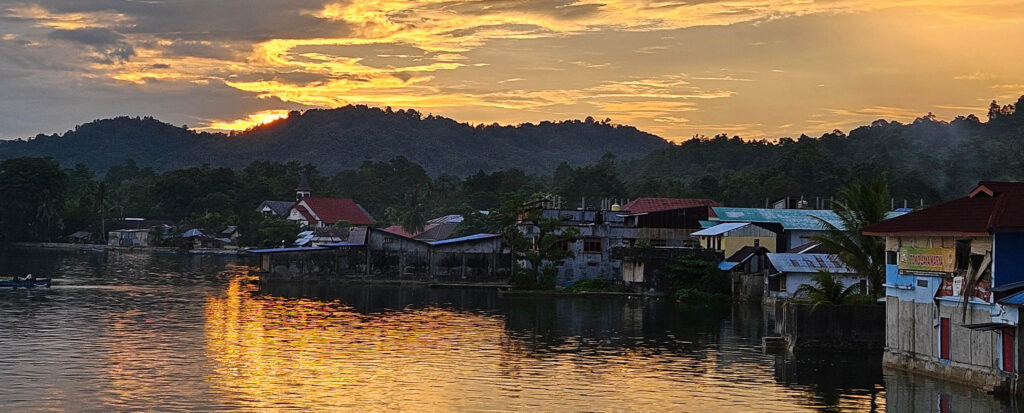
A story about daily rhythm, island life and the quiet shift that happens once you stop resisting time.
Beyond schools and education, daily life on Saparua is also shaped through local craftsmanship. This story explores pottery, material culture and the quieter rhythm of making in Ouw.