
Slow Travel Experience: What Staying Longer Reveals
What you see at first is rarely what stays with you
A first impression is never the full story
It was in Karamoja, in 2018, that something shifted.
At the time, I was travelling through northern Uganda on a relatively fast route. I had spent time in Kampala for a project and decided to use the opportunity to see more of the country. A week felt sufficient, enough to get a sense of the region and experience its landscapes. We travelled north, slept in a kraal, visited Kidepo Valley and covered a significant part of Karamoja in just a few days.
But somewhere along the way, it became clear that I hadn’t really seen anything.

There is a difference between passing through a place and actually being there. I couldn’t fully explain it at the time, only that what I experienced felt incomplete. The landscapes were there, the people were there, but everything seemed to pass by without ever settling. It felt like catching fragments of something that required more time than I had given it. That realisation stayed with me and made it clear that I would return, not to see more, but to understand what I had missed: something that became much clearer to me while travelling again through Karamoja.

What lies beneath the surface
Most travel moves quickly by design. You arrive somewhere, observe what is visible, take in the surroundings and continue to the next place. It gives you a sense of direction and the feeling that you are making the most of your time, but what you see in those first days is only the surface.
You notice people, but you don’t know where they are going or what their day looks like. You see houses, but not the lives inside them. You move through a place without ever really becoming part of its rhythm. You are present, but only briefly intersecting with what is already unfolding.
“Some places aren’t meant to be understood in a single visit.”
When you stay, things begin to shift
When I returned to Karamoja and stayed longer, that changed.
Conversations moved beyond the familiar questions into something more ordinary and therefore more meaningful. Instead of asking where I was from or how long I would stay, people spoke about their daily lives. About how well the garden was doing, about the rain arriving earlier than expected, about school results and preparing goods for the weekly market in Namalu.
At first, these might seem like small details, but they are not. They are the structure of daily life, and it is only when you begin to understand those structures that a place starts to make sense. Not as a destination, but as a lived environment. In many ways, it is not so different from life at home, although shaped by completely different circumstances. That realisation brings a certain perspective, both on the place you are in and on the things you thought mattered before.
Time turns places into people
I experienced the same shift again on the Moluccas, where we spent two weeks on Saparua working with a local organisation focused on education. In the first days, everything still feels distant. You don’t know names, faces pass by without context and you remain clearly an outsider observing what happens around you.
But time changes that.
Gradually, you begin to recognise people, then greet them, and eventually have conversations that go beyond introductions. The place slowly transforms from a setting into a network of lives that you briefly become part of. People are no longer anonymous, but individuals with stories, routines and responsibilities. That is the moment when a place truly comes to life.

“Places don’t become real until people do.”
What you don’t see at first
The same happened in Pian Upe, although it took me years to understand it.
The first time I passed through, I didn’t even realise where I was. We were on our way to Moroto, and somewhere along the route the guide mentioned that this was an area where wildlife could be spotted. I remember standing on top of the vehicle, photographing the sunset and scanning the landscape for animals. It felt vast and empty, a place you simply pass through on the way to somewhere else.
Years later, I returned and stayed longer.
That same landscape revealed something entirely different. There were communities living there, people connected to the land, and ongoing efforts by the Uganda Wildlife Authority to restore wildlife and reshape the area into a national park. There was movement, intention and life, none of which had been visible to me the first time. Not because it wasn’t there, but because I hadn’t given it the time to become visible.
“The slower you move, the more there is to notice.”

Slowing down changes the journey
Over time, this has changed the way I travel.
Where I used to move from one place to another as efficiently as possible, I now slow things down. Distances have become shorter, routes less direct and plans more flexible. Instead of focusing on reaching a destination, I create space along the way, allowing time for unexpected moments and encounters that cannot be planned.
During a recent trip through Morocco, it would have been easy to drive from Merzouga to Fez in a single day, but we chose to add a stop in Midelt. That simple decision changed the entire experience. It created time to explore, to stop along the way and to notice what would otherwise have been overlooked. Like our stop at the Sudanese community living nearby Merzouga. Often, it is in those in-between moments that a journey gains its depth.
Beyond the idea of ‘having seen it’
What continues to surprise me is how often travel is approached as something to complete. You see it in small moments, such as during a game drive when someone spots an elephant and immediately says, “we’ve seen it, let’s move on.” As if the act of seeing is enough.
But it is never just about the animal itself. It is about what it is doing, the environment it moves through and everything that happens around it. No two moments are the same, even when they appear to be. To treat them as such is to reduce the experience to something flat, something that can be finished too quickly.
Returning instead of rushing
Staying longer does not always mean extending a single visit. Sometimes it means returning.
A round trip can show you where something resonates and where there is more to uncover. It allows you to recognise places that stay with you, places that deserve more time and attention. Instead of trying to see everything at once, you begin to move with more intention, returning to the places that invite you to stay longer.
“Seeing something once is not the same as understanding it.”
“Travelling slower isn’t about time, but about attention.”
What staying longer reveals
What staying longer reveals is not necessarily a place, but a layer beneath it.
It is something that only becomes visible over time, not because it is hidden, but because it requires attention and patience. It changes how you move, what you notice and what you value. It also changes what you no longer feel the need to see.
For me, it has meant letting go of the need to see everything, and instead allowing myself to stay with what feels unfinished, a slow travel experience. It has meant returning to places, not because I missed something, but because I know there is more to understand. I find myself drawn to the in-between moments, to conversations that have no purpose other than to share time, and to places that only begin to make sense after a while.
I no longer travel to cover ground, but to feel where I want to remain a little longer.

“For me, staying longer means giving a place the time to unfold.”
Continue Exploring Slow Travel
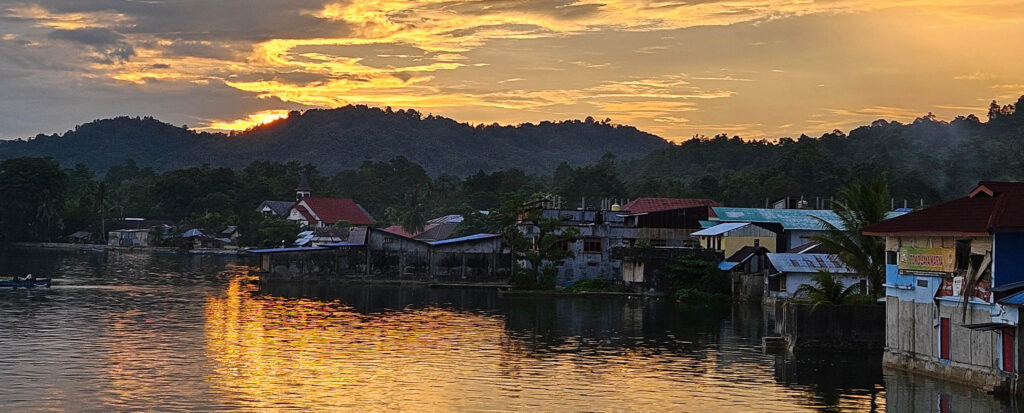
An island where daily life slowly reshapes your relationship with time,rhythm and movement.
A region where distance and movement gradually shift the way travel itself is experienced.
