Slow Travel in Indonesian Borneo
Notes from slow travel in Indonesian Borneo, shaped by time spent in and around Tanjung Puting National Park.
Travelling by klotok through the rainforest reveals a different pace — one that cannot be understood through short itineraries alone.
Time on the river
Travelling through Tanjung Puting by klotok sets a slow and steady rhythm. Days unfold on the river, moving between feeding platforms and long stretches of forest where very little seems to happen at first. Orangutans are often the main reason to come here, but they are only part of what defines the experience.
Four days on the river is enough to realise that this landscape cannot be reduced to a sequence of stops.
It is not the sightings themselves, but the time in between them that begins to shape the journey.
What lies beyond the route
Spending extended time on the boat also changes conversations. Sitting with a guide day after day, stories surface naturally. Not only about wildlife, but about the wider region — about traditional Dayak villages deep in the forest, places only reachable on foot, far from the routes most visitors follow. About birdlife, forest paths and a way of life shaped by the river and the land.
It becomes clear that this part of Indonesian Borneo offers far more than a single focus on orangutans allows.
Slow travel in Indonesian Borneo begins to shift the focus away from what is seen, toward what is understood.
A shift in pace
After the klotok journey, there was time left before heading to the airport. Instead of waiting, we walked through Kumai — a town often passed through without much attention. Markets, streets, everyday routines. Nothing remarkable in itself, but grounding.
Small pauses like this change how a journey settles.
They place the experience back into context — not as something separate, but as part of a wider rhythm of daily life.
Into the narrower waterways
One moment stood apart from the main route. Leaving the larger boats behind, we took a canoe into narrow waterways — quiet, enclosed, almost completely still. The forest closed in. Sound shifted. Movement slowed further.
Compared to the river, which can feel busy despite its scale, this felt like stepping fully into the interior. It was here that the sense of being deep inside the rainforest truly arrived. Not as a highlight, but as a subtle shift — from observing to being present within it.
A note to return
Looking back, staying longer would not have meant adding more highlights. It would have meant shifting attention — away from fixed routes and known encounters, toward culture, forest life and the spaces in between. Indonesian Borneo invites that kind of approach, if you allow time for it.
Slow travel does not expand a journey by distance, but by depth.
This journey was arranged with BeBorneo Tours, whose local knowledge shaped much of what unfolded along the way.
Along the river
Long days on the water shaped the rhythm of travel and the hours in between. A playlist that accompanied me during those moments on the river sits alongside this note: Borneo Soundscapes on Spotify.

“It is not the distance you travel, but the pace at which you begin to notice.”
An open question
What would change if you stayed — not to see more, but to notice more?
And how much of a place only begins to exist once you stop moving through it?
Continue Exploring Slow Travel
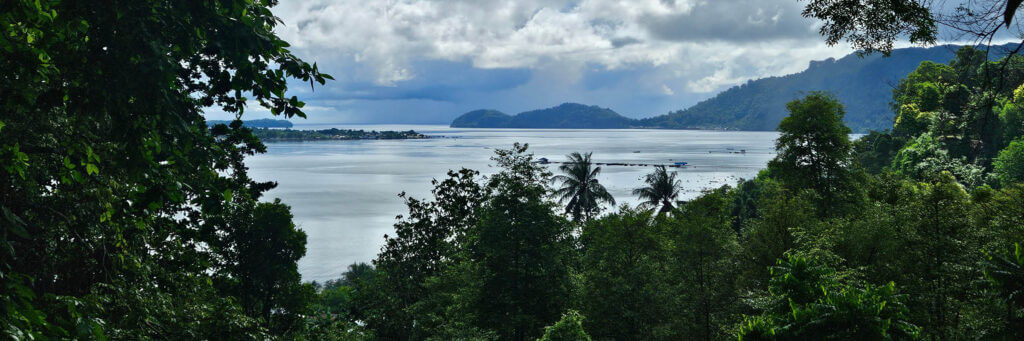
A reflection on why time and attention often reveal more than movement and speed ever can.
Island crossings, slower rhythms and the gradual shift from travelling through places to becoming part of them.