The Moment We Got Stuck in Pian Upe
“Sometimes the moment you stop moving is the moment you start noticing what was already there.”
Before the road slowed down
We started early, just after sunrise, moving quietly through Pian Upe in Uganda, deep in the wider Karamoja region. The air was already warm, but still carried the calm of the morning. Game drives follow a certain rhythm, even when nothing is guaranteed. You move, you look, and you expect the day to unfold as planned. At that point, there was no reason to think it wouldn’t.

When the road stopped
The mud didn’t look as deep as it was. We drove into it slowly, expecting to pass through without much effort. Within seconds, the wheels sank, and the vehicle came to a stop. That first moment always feels temporary, like something you can fix quickly.
We got out, looked at the road, and tried to make sense of it. The sun was already high, and the heat settled in almost immediately. Someone said it would take time, and that thought stayed for a moment. You realise quickly that this is not something you can rush.
“There is a point where continuing is no longer an option, and staying becomes the only way forward.”

Somewhere between waiting and deciding
We tried again, but the vehicle only sank deeper into the ground. That was the point where it became clear we weren’t moving anytime soon. UWA was called, and we knew help would come, eventually. But in Karamoja, eventually is not something you measure in minutes, something that only begins to make sense once you understand how the region reshapes the way you move and travel through it.
There was a short silence, the kind that comes when plans fall away. Then someone laughed, and asked if anyone wanted coffee. It shifted something almost instantly, without needing explanation. If you cannot move, you might as well stay where you are.
What becomes visible when nothing moves
Standing there, the landscape felt different than it had before. Not because it had changed, but because we had stopped moving through it. A group of giraffes stood at a distance, watching us without urgency. It felt as if we were the interruption, not them.
The conversations began to change as well. What started as simple observations slowly moved into something more detailed. We talked about trees, about how to recognise them, and how they grow. The whistle acacia stood close by, its structure suddenly easy to follow.
You could see the ants moving in and out of the hollow thorns. Something that would normally pass unnoticed became the focus. It was not a planned moment, but it felt complete in its own way. Time was no longer something we were trying to manage.

“The moment you stop moving is often the moment everything else becomes visible.”
When help arrives, but nothing really changes
When the UWA rangers arrived, there was a sense of relief. Not because the situation had changed immediately, but because we were no longer alone in it. For a brief moment, even they got stuck in the same stretch of road. It created an unexpected sense of connection, without needing words.
Eventually, both vehicles were pulled free from the mud. We continued, but something in the pace had already shifted. The road ahead looked the same, but it no longer felt the same. What stayed behind was not the delay, but the moment within it.
“Some moments don’t stand out while they happen,
only later do they become the reason you remember the day.”
What stays with you
Later that day, everything continued as planned again. We moved, we drove, and the rhythm returned to something familiar.
But the part that stayed was not what we saw while moving. It was what happened when we were forced to stop.
In that moment, there was time for conversations that would not have happened otherwise. Details that normally remain invisible became clear without effort. And the experience felt less like something we were following, and more like something we were part of.

“What felt like a delay at the time turned out to be the only moment that could not have happened any other way.”
Continue Exploring Karamoja
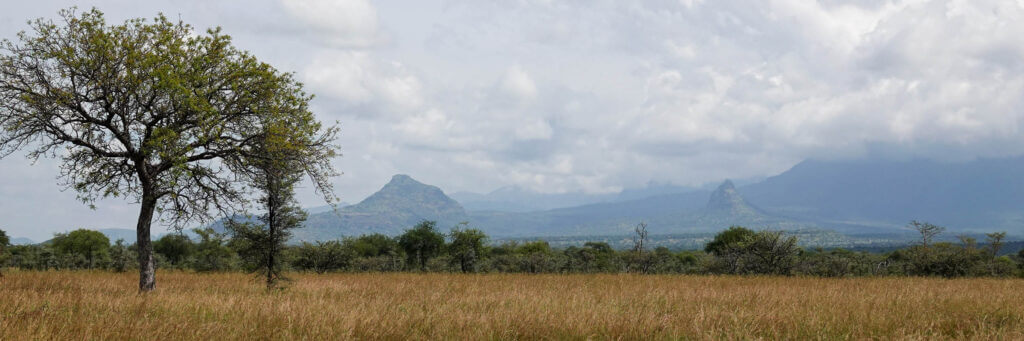
An overlooked wildlife reserve in Karamoja that slowly reveals itself beyond the main road. What first appears empty gradually unfolds into a landscape shaped by wildlife, communities and a rhythm that only becomes visible once you stay longer.
Some experiences only begin once movement stops. Reflections on slowing down, returning to places, and why the moments in between often reveal more than the destinations themselves.