
Most people have never heard of the Moluccas. But once you arrive, you realise this is not just another destination.
Some places don’t reveal themselves immediately. The Moluccas are one of them. They don’t welcome you with ease or comfort, and there is no carefully curated first impression waiting for you upon arrival. Instead, getting here already asks something of you. Time stretches, plans shift, and somewhere along the way you begin to realise that this journey is not about efficiency.
By the time I arrived in Ambon, after long flights, unexpected changes and a journey that refused to follow a straight line, something had already shifted. The idea of simply “seeing” a place no longer felt relevant. This was not going to be a trip about ticking boxes. I wasn’t just here to visit the Moluccas. I was here to experience them, in whatever way they would reveal themselves.
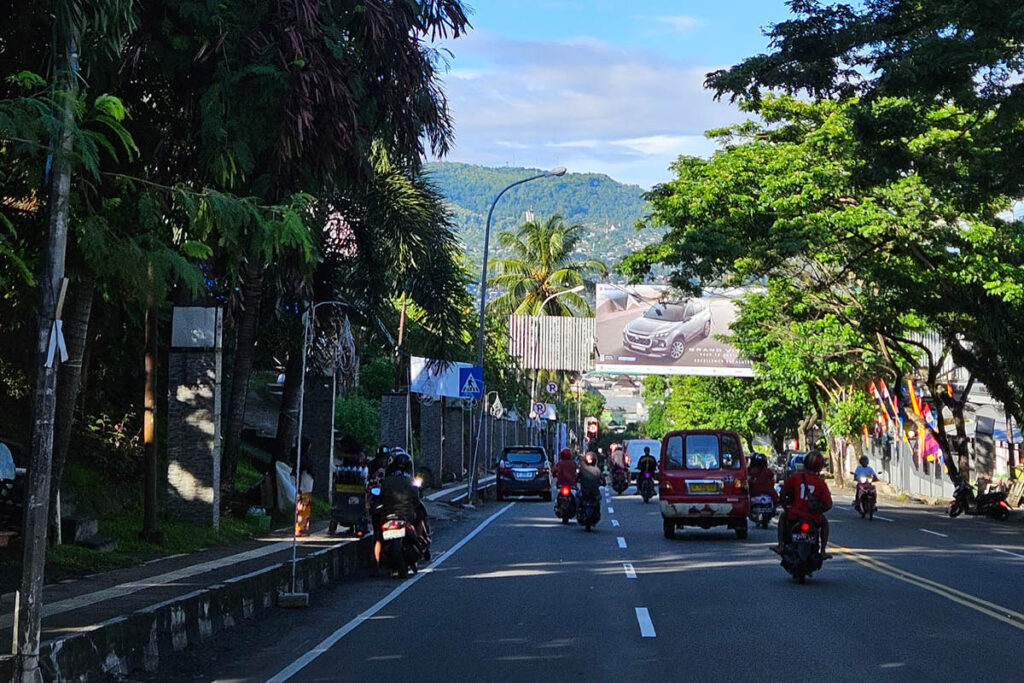
The Moluccas, also known as the Maluku Islands, lie scattered across the eastern part of Indonesia, between Sulawesi and Papua. On a map, they may appear remote and fragmented, but historically, they were anything but peripheral. For centuries, these islands were at the centre of global trade, driven by the demand for spices like nutmeg, cloves and mace.
That history still lingers, not in an obvious or overwhelming way, but subtly woven into the identity of the islands. What makes the Moluccas so fascinating today is precisely that contrast. Once fought over by empires, they now exist largely outside the main currents of tourism. And that distance, both physical and cultural, shapes everything about travelling here.
“Somewhere along the way, the journey stopped being about arriving.”
Reaching the Moluccas is not a simple transition from one place to another. It is a process that unfolds gradually, often requiring multiple flights, long layovers and a willingness to adapt when things don’t go as expected. Plans change, connections shift, and sometimes small inconveniences start to accumulate in ways you hadn’t anticipated.
At one point during the journey, a phone stopped working. A bank card refused to cooperate. A flight that was supposed to take us further east disappeared from the schedule. Yet none of these moments felt like real problems. Instead, they seemed to belong to the nature of the journey itself. Travelling here means letting go of control, accepting uncertainty and understanding that not everything needs to be resolved immediately.
By the time you finally board the last flight towards Ambon, the mindset has already changed. The urgency fades, and in its place comes a quiet acceptance that this journey will unfold on its own terms.
Arriving in Ambon early in the morning feels slightly unreal. The air is warm and heavy, wrapping itself around you in a way that instantly slows everything down. After days of travelling, your sense of time becomes blurred, and even the simplest movements require a moment of adjustment.
Ambon does not present itself as a polished destination. Tourism is still developing, and there is little effort to translate or explain things for visitors. Signs are often only in Indonesian, and the infrastructure reflects a place that is primarily lived in, rather than visited. But it is exactly this absence of polish that gives Ambon its character.
There is a certain honesty to it. You are not stepping into a version of the island designed for travellers, but into a place that exists on its own terms. And that shifts your perspective almost immediately. You stop looking for what is “there to see” and start paying attention to what is simply there.
“Nothing here is designed for you, and that’s what makes it real.”
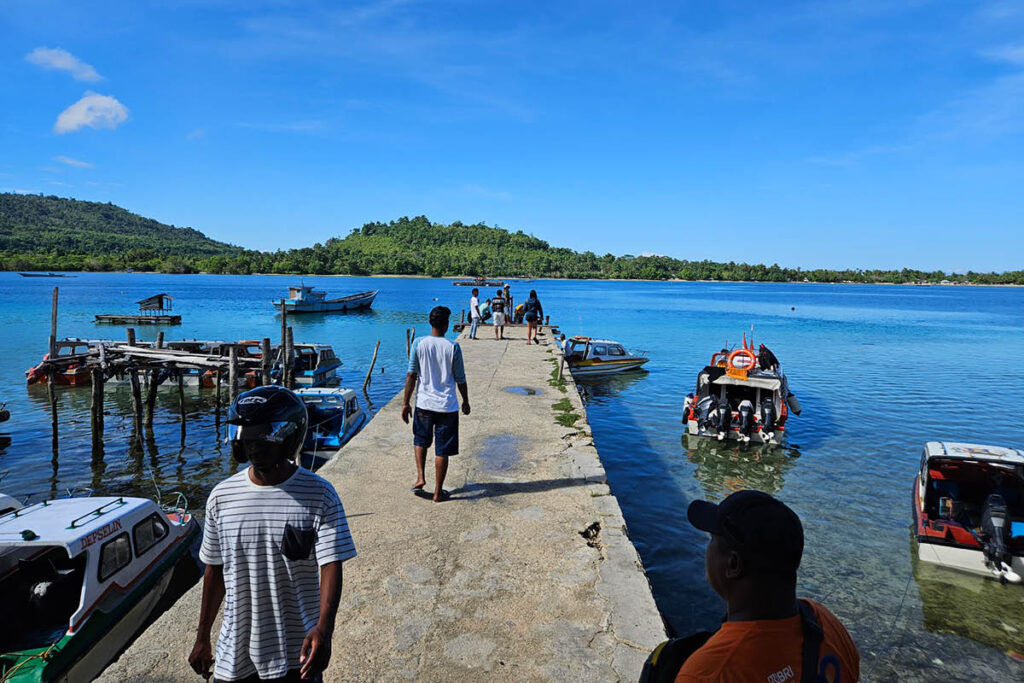
Moving between islands in the Moluccas introduces a completely different relationship with time. Distances are no longer defined by kilometres, but by hours, conditions and circumstances that cannot always be predicted. Boats depart when they are ready, not necessarily when they are scheduled, and delays are often accepted rather than questioned.
At first, this can feel disorienting. You find yourself checking the time, trying to understand when things will happen, searching for a structure that simply isn’t there. But gradually, that need begins to fade. Instead of focusing on when you will arrive, you begin to notice where you are.
A harbour in the early morning light. Conversations that unfold without urgency. The quiet rhythm of daily life that is not shaped by efficiency, but by presence. Travel becomes less about moving from one place to another, and more about being part of what happens in between.
“You don’t travel faster here. You simply learn to slow down.”
It was on Saparua that this shift became most tangible. Life on the island follows a rhythm that is both simple and deeply connected to the community. Days begin early, often accompanied by sounds that carry across the island before sunrise, creating a shared sense of beginning rather than an individual start to the day.
The villages feel close, not only in distance but in the way people interact. Children gather quickly when something happens, curiosity turning into connection within moments. Conversations start easily, and there is a sense that time is available, rather than something that needs to be managed.
In that environment, travel begins to change. You are no longer moving through a place as an observer, but slowly becoming part of it. Not in a grand or dramatic way, but in small, everyday interactions that start to shape your experience.
“This was the moment it stopped being travel, and started becoming something else.”
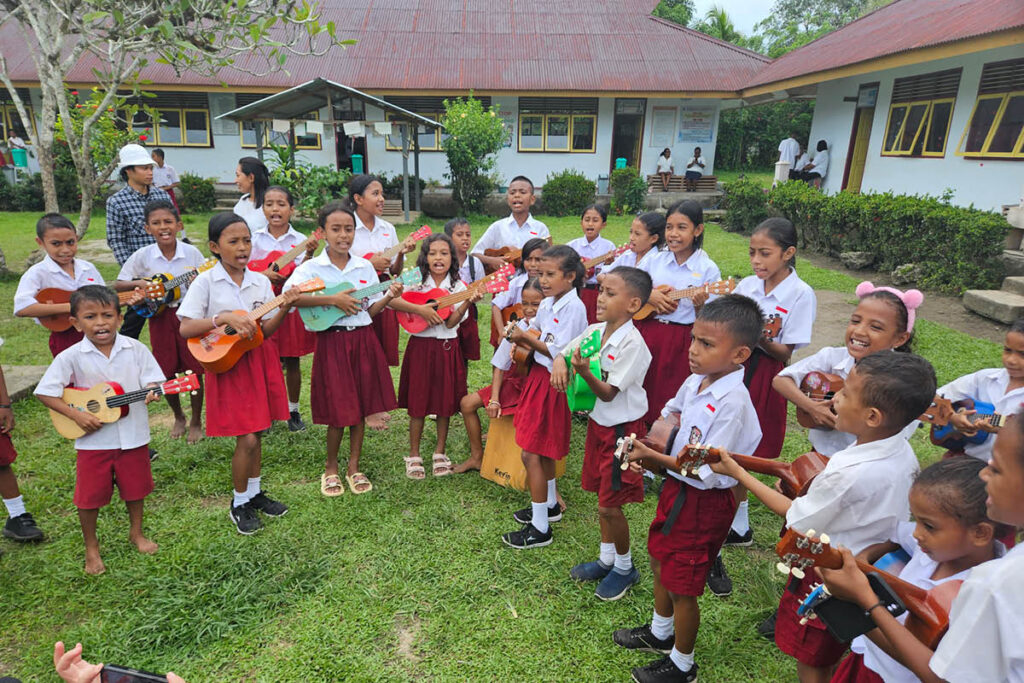
This journey was not only about travelling. I came to the Moluccas to work with Heka Leka, a local organisation focused on education, supporting schools and creating opportunities for children across the islands. That context changed the way I experienced everything around me.
Instead of observing from a distance, I became involved in daily life. Visiting schools, reading with children, talking to teachers and seeing how education is shaped by the realities of island communities. In one classroom, children carefully constructed sentences in English, repeating words until they became familiar. In another, a teacher transformed a simple lesson into something energetic and engaging, showing what education can become when it is driven by passion.
There were moments of joy, filled with music, laughter and spontaneity. But there were also moments that revealed a different side of life on the islands. Conversations about nutrition, about opportunities, about challenges that are not immediately visible when you first arrive. It was in those moments that the Moluccas became more than a destination. They became a place with depth, complexity and meaning.
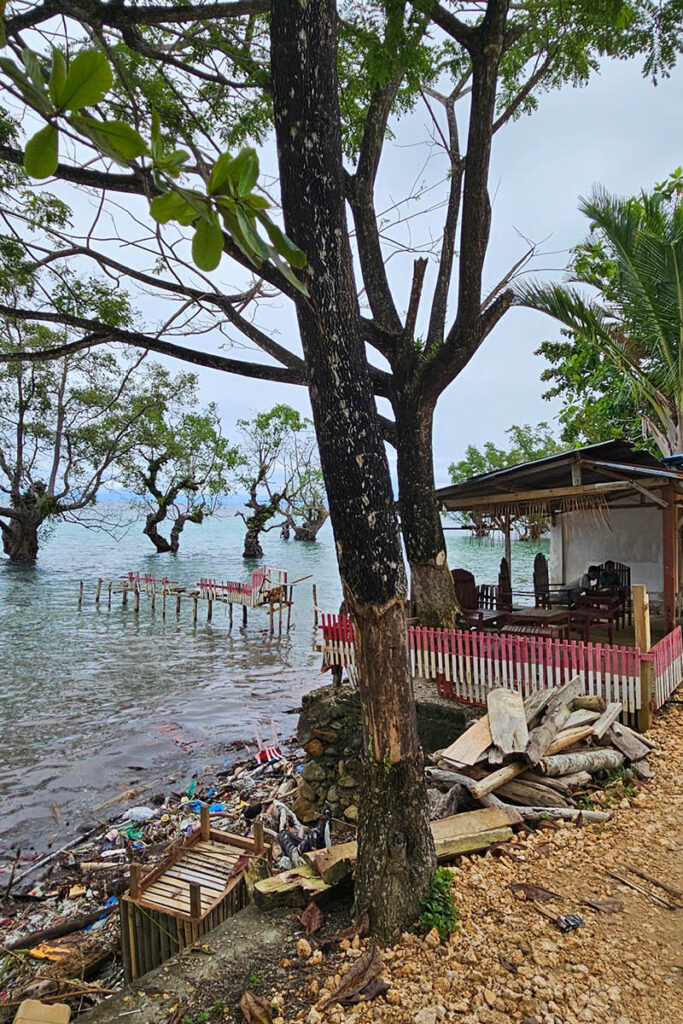
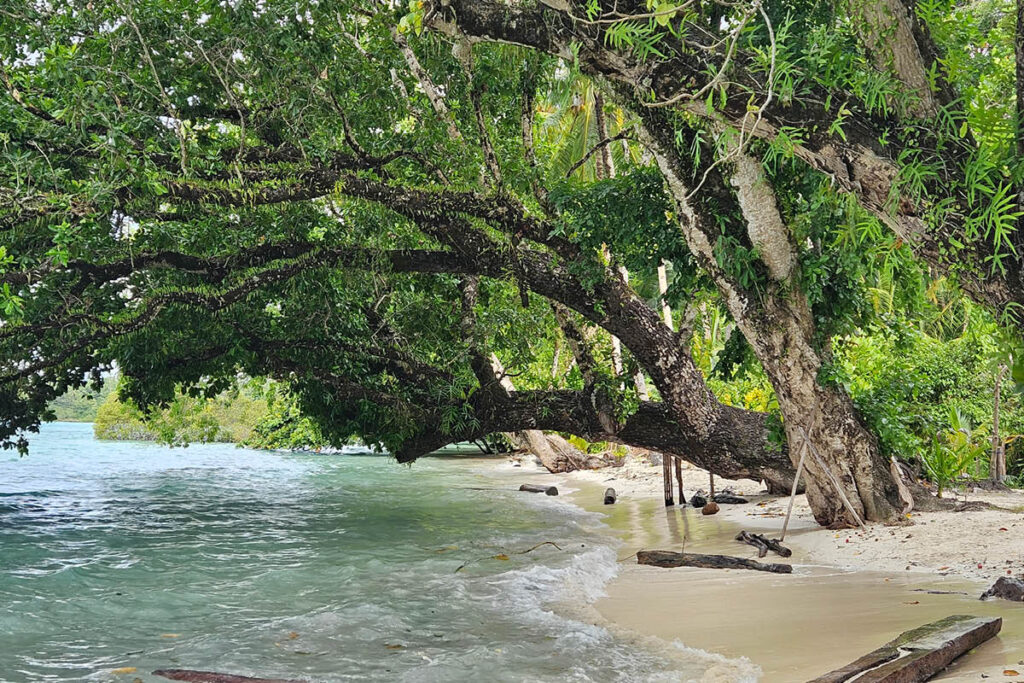
From the outside, the Moluccas can easily be seen as a hidden paradise. The clear water, the green islands and the quiet beaches create an image that feels almost untouched. But that image is only part of the story.
Spending more time here reveals layers that are not immediately visible. The challenges within education systems, the differences between communities, and the presence of plastic in places that otherwise feel pristine. These contrasts do not diminish the beauty of the islands, but they do change the way you understand them.
Because a place is never just what it appears to be at first glance. It is shaped by everything that lies beneath the surface, both visible and invisible.
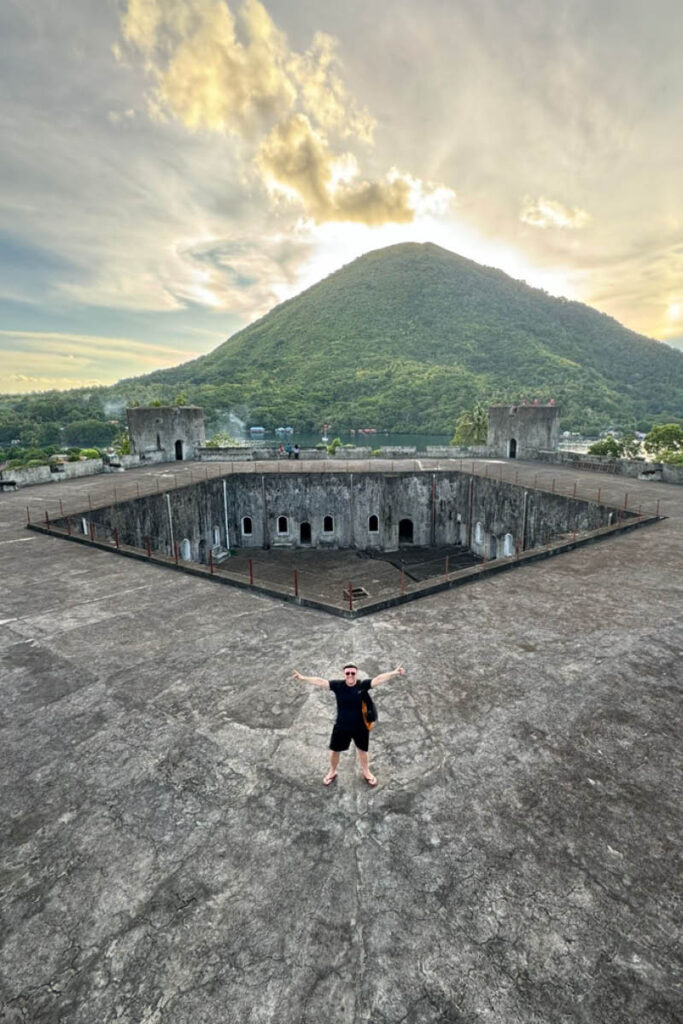
Further south, the Banda Islands rise from the sea with a presence that feels both historical and timeless. Their significance within the story of the Moluccas is undeniable, yet they cannot be fully captured in a brief description.
Banda is not simply another stop along the way. It is a place that asks for time, attention and its own narrative. To understand it properly, you need to experience it separately, allowing its history, landscape and atmosphere to unfold at their own pace.
“Some places are not part of the story — they are the story.”
The Moluccas are not an easy destination, and they do not try to be. Travelling here requires patience, flexibility and a willingness to adapt to circumstances that are often outside your control. Comfort is not always guaranteed, and predictability is rare.
For some, that will be a reason not to come. But for others, it is precisely what makes this place so compelling. Because in a world where travel is increasingly streamlined and predictable, the Moluccas offer something different.
They ask you to slow down.
Long after leaving, it is not the places themselves that remain most clearly. It is the moments that linger. Conversations that unfolded without urgency, children laughing at your attempts to speak their language, and the quiet of an island night where the absence of noise becomes something you suddenly notice.
The Moluccas do not try to impress. They do not reveal themselves all at once. But if you give them time, they offer something that is becoming increasingly rare in travel.
Not just a journey through islands, but a different way of experiencing the world.
“This is not a place for comfort. It’s a place for perspective.”