
A region that quietly shifts your perspective on what travel can be.
When most people think of Uganda, they picture safaris, national parks, and gorilla trekking in Bwindi. It’s a country often defined by its wildlife and well-known routes through the west, where much of the tourism is concentrated. Even iconic species like the shoebill stork are part of that image.
Karamoja sits far outside of that narrative.
Located in the north-east of the country, it offers something entirely different. The landscapes are wider, the pace is slower, and the experience feels less structured. It is a region that hasn’t been shaped by tourism in the same way, and because of that, it holds on to a character that feels more independent, more grounded, and in many ways, still undiscovered.
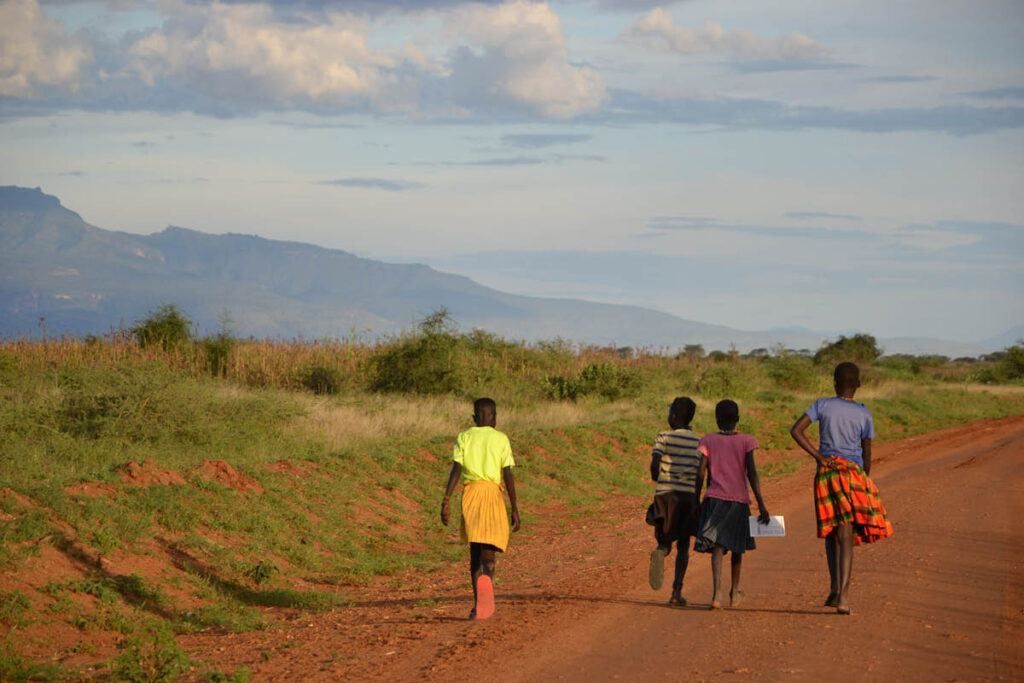
Karamoja lies in the north-eastern part of Uganda, bordering Kenya and South Sudan. Reaching it requires a journey that already sets the tone for what is to come.
Most routes begin in Entebbe or Kampala, heading east towards Jinja and Mbale, before turning north. From there, the road continues past Sipi Falls and into increasingly open terrain. After Chepsikunya, you cross into Karamoja, and the landscape begins to shift.
The distance itself says something about the region. What looks manageable on a map quickly turns into a full day of travel, often taking seven to eight hours or more. Along the way, you leave behind the busier, more developed parts of Uganda, moving gradually into a space defined by openness rather than density.
“The distance isn’t just measured in kilometres, but in how far you move away from everything familiar.”
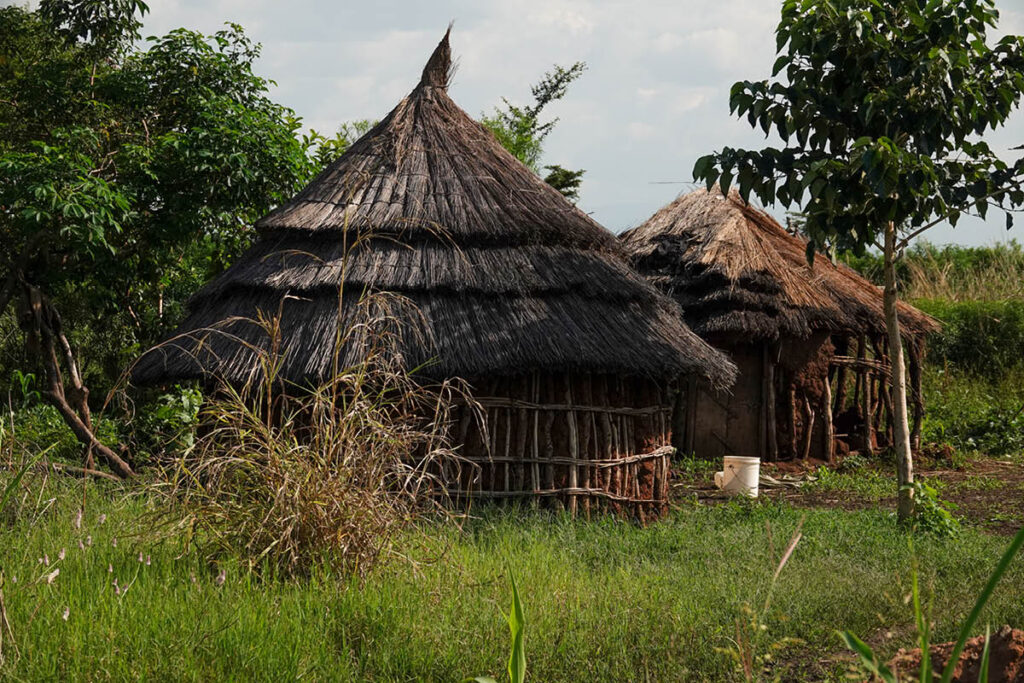
Karamoja has followed a different path of development compared to the rest of Uganda, and that difference is still visible today.
Infrastructure, while improving, remains more limited. Roads that once took four hours to navigate can now be covered in half the time, but the region still feels less connected than other parts of the country. Facilities are simpler, and services are more basic, not in a way that feels lacking, but in a way that reflects a different balance.
It is a place where less is available, but where very little is actually missing. Life is organised around what is needed, rather than what can be added. And in that sense, the region carries a kind of clarity that is easy to overlook elsewhere.
The difference between Karamoja and what many travellers expect from Uganda becomes clear quite quickly.
There is far less tourism, which changes the entire dynamic of the experience. You are not moving through a system designed for visitors, but through a region that exists on its own terms. That also affects the pace. Days unfold more slowly, shaped less by schedules and more by the rhythm of daily life.
What stands out most, however, is the way people interact. Conversations feel open and genuine, without the layer of expectation that often comes with more visited places. It creates a sense of connection that feels immediate, not constructed.
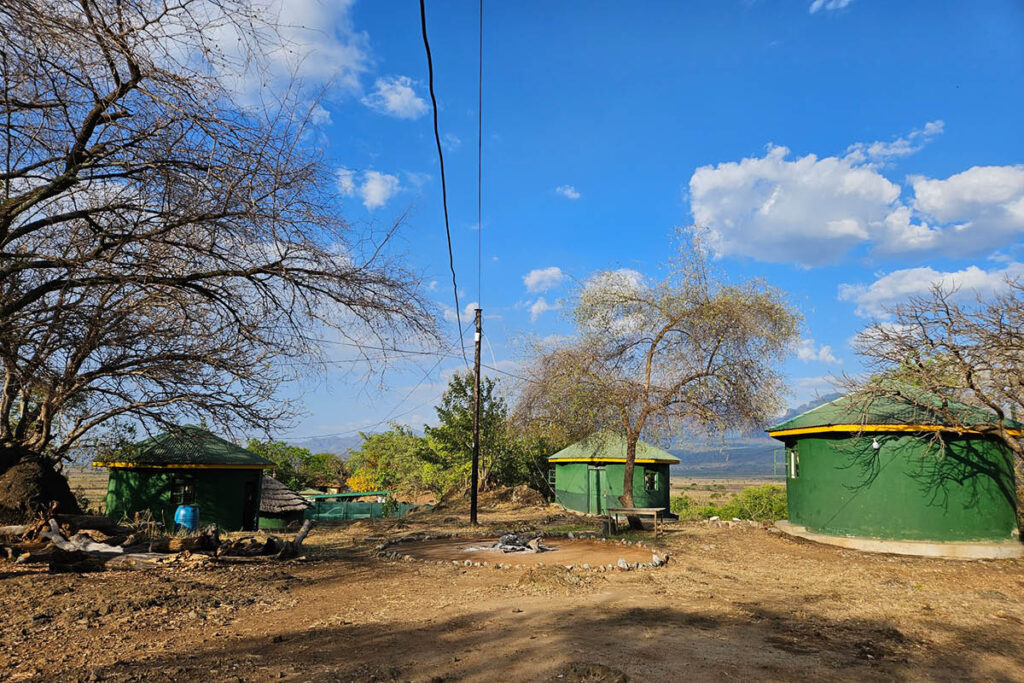
“Less developed doesn’t mean less complete: it simply means built on different priorities.”
The landscapes of Karamoja are defined by space. Wide plains stretch out in every direction, interrupted by mountain ranges that rise unexpectedly from the ground. In some places, these mountains appear almost isolated, standing alone within the openness that surrounds them. Mount Napak, for example, emerges suddenly from the plains, creating a contrast that is both striking and difficult to anticipate.
Further north, Kidepo Valley National Park offers a completely different perspective. Set within a vast valley and surrounded by rugged mountains, it is one of the most remote and visually impressive areas in Uganda. Despite its scale and beauty, it remains relatively untouched by mass tourism, largely due to the distance required to reach it.
Beyond the landscapes themselves, it is the details that stay with you. The colours of the region, the tones of the earth, and the traditional shuka worn by local communities, often in deeper greens, blues and darker shades, create a visual identity that feels distinct from other parts of East Africa.
“Here, space is not something you pass through — it’s something you slowly begin to understand.”
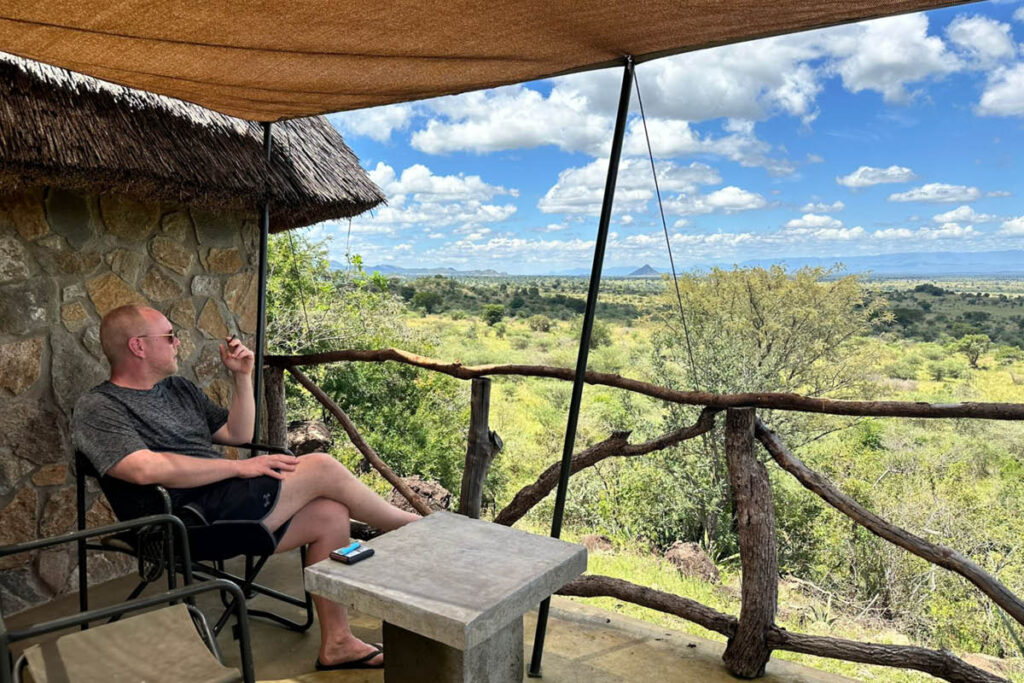
“You don’t travel through Karamoja efficiently, you travel through it consciously.”
Travelling through Karamoja requires a different mindset.
Distances can be misleading, especially when viewed on a map. While routes may appear short, average speeds are often lower, meaning journeys take longer than expected. Planning needs to allow for that. Weather can also play a role, with sudden changes affecting accessibility, particularly in more remote areas or when heading into the mountains.
Flexibility is key. Plans may shift, and timing is rarely exact.
Accommodation across the region is welcoming and often beautifully situated, but it does not follow the same standards or expectations found in more developed destinations. Power cuts are common, and amenities can vary. Rather than being a limitation, this becomes part of the experience.
Practical preparation matters. Carrying cash is essential, as banking facilities are limited and card payments are not often available. If you are planning your own journey through Karamoja, it helps to understand the practical side of travelling here, from distances and timing to what to expect on the ground.
What you receive in return is something harder to define. Open landscapes, strong communities, and a sense of presence that is difficult to replicate in more structured travel environments.
Karamoja offers a range of locations that together give a broader sense of the region.
Pian Upe Wildlife Reserve provides a quieter alternative to traditional safari destinations, with wide landscapes and a different approach to wildlife encounters. Moroto acts as a central point within the region, offering access to surrounding mountains and local initiatives.
Further north, Kidepo Valley National Park stands out as one of the most remote and visually striking national parks in East Africa.
Other places, such as Nakapelemoru, one of the largest local villages in the region, or the markets in Kotido, offer a more direct connection to daily life. Smaller experiences, like visiting Napadet Cave or sourcing local products such as honey in Moroto, add further layers to the journey.
Karamoja is not a place where travel revolves around activity in the way many people are used to. It requires a shift in how you approach the experience itself.
Planning becomes less important than presence. Moving from one place to another takes time, and that time is not something to fill, but something to accept. Moments that might seem uneventful at first begin to take on a different meaning once you allow yourself to stay within them.
That does not mean there is nothing to do. Quite the opposite.
You can spend your days walking through open landscapes, hiking mountains like Mount Kadam, exploring areas beyond the main routes, or quietly observing wildlife in places where encounters feel less predictable. Birdlife is abundant, and for those willing to take the time, the region offers some of the most rewarding birding experiences in Uganda. Cultural visits, guided by local communities, add another layer, not as something staged, but as something lived.
What makes it different is not the absence of activity, but the absence of structure around it. There is no fixed sequence, no checklist to complete. Observation replaces expectation, and understanding grows not from what you see, but from how long you are willing to remain within it.
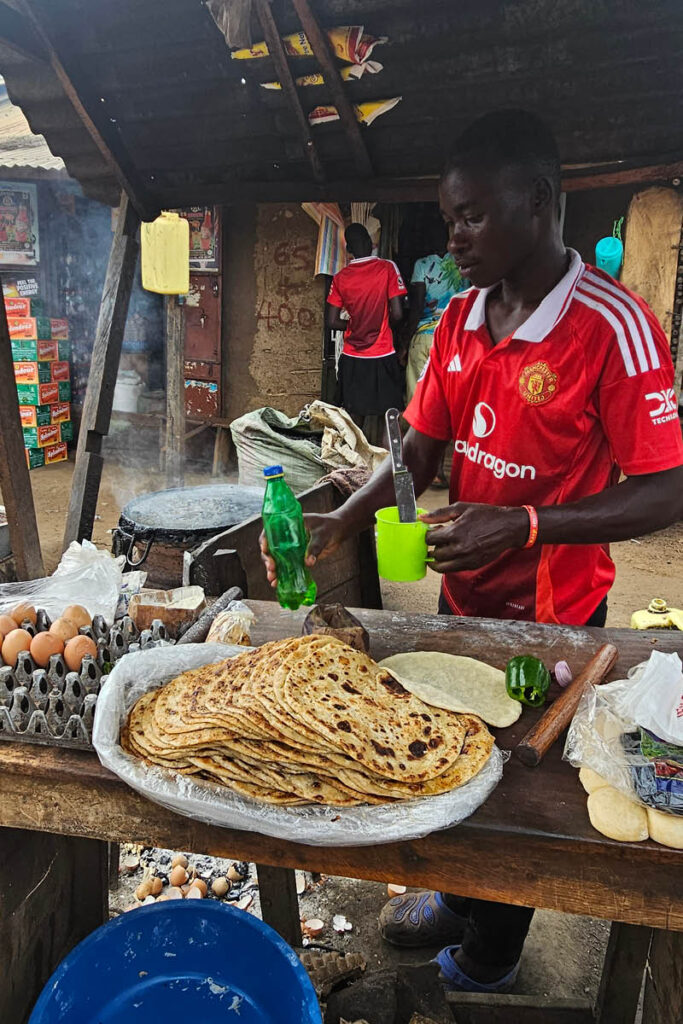
“Each place adds a layer, but it’s the space in between that defines the experience.”
Karamoja is not suited to every type of traveller, and that is part of what defines it. Those looking to move quickly through a destination, to see as much as possible within a limited timeframe, will find it challenging. Distances alone make short visits impractical, and the region does not lend itself to structured, high-efficiency itineraries.
It also does not cater to expectations of luxury in the conventional sense. While accommodation and food can be of high quality, they are shaped by local conditions rather than international standards. Variety is limited, and certain comforts are not guaranteed.
At the same time, the region offers something valuable for those who are open to it. Even families with children often find that the simplicity of daily life creates opportunities for connection that are harder to find elsewhere.
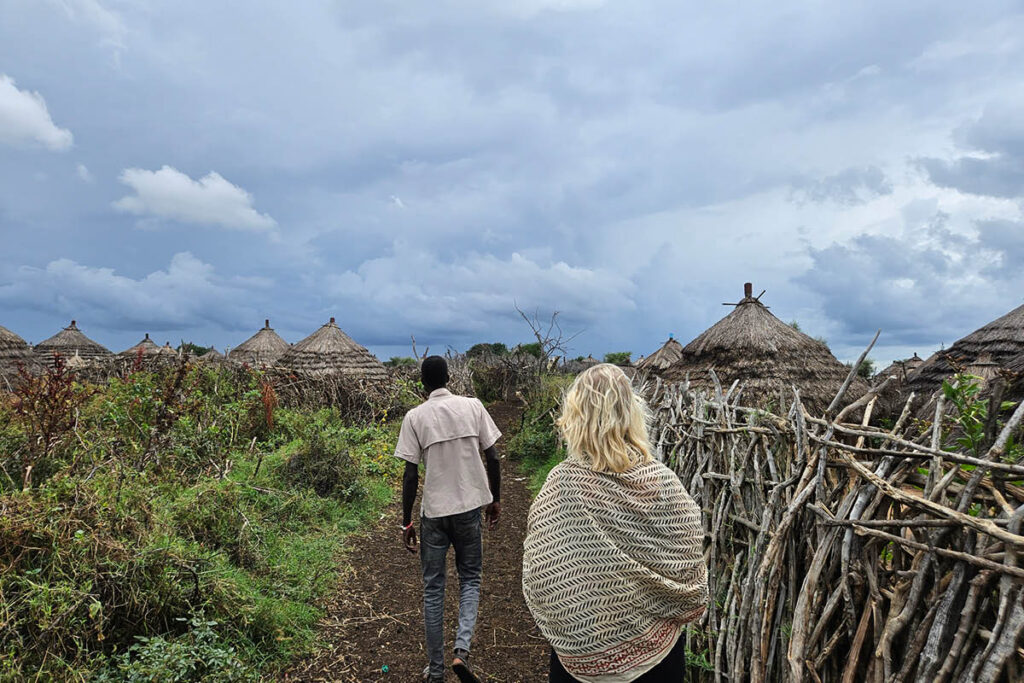
What stays with you after travelling through Karamoja is not a single place or moment, but a combination of impressions that gradually settle in. The openness of the landscape, the quiet rhythm of daily life, and the way people interact without urgency all contribute to a sense of calm that is difficult to describe. There are moments where the scale of the surroundings becomes clear, particularly at night, when the absence of artificial light reveals a sky filled with stars.
It is in those moments that perspective shifts. Karamoja does not present itself all at once, and it does not ask to be understood immediately. But over time, it leaves an impression that extends beyond the journey itself, shaping the way you look at everything that follows.
That perspective is something that has continued to shape the way I travel and create, as I describe in How Karamoja Shaped My Vision.
“Karamoja doesn’t adjust to you — you have to adjust to it.”